








The Series B will take the AI platform, which has already detected more than one trillion waste objects, further into North America and Europe
Greyparrot, the London-based AI waste intelligence company, has raised $27 million (£20M/€23M) in Series B funding led by technology investor Omar Mir. The round follows a major milestone: Greyparrot’s AI has now detected more than one trillion waste objects. The company aims to use the funding to scale its technology and help abate over one million tonnes of waste by 2030.
“Waste is one of the planet’s largest untapped resources, and data is the infrastructure that unlocks it”, said Mikela Druckman, co-founder and CEO. “This funding lets us scale rapidly across North America and Europe and grow our AI, data science and product teams.”
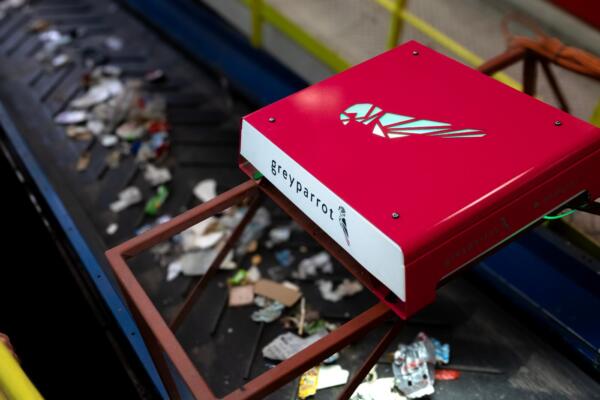
Analyzers above the sorting belts
Greyparrot’s AI camera systems, known as Analyzers, are installed above sorting belts in recycling facilities across more than 20 countries, identifying materials, products and brands in real time. Customers including WM, Circular Services, Veolia, Biffa and FCC use the data to improve recovery rates, monitor material quality and run more profitable facilities. Sites have reported efficiency gains of 10% to 30%, with one saving more than £1.5 million in a year.
Brands such as Unilever, L’Oréal and Kenvue use the Deepnest platform to understand how packaging performs after disposal and to manage exposure to EPR fees and the EU PPWR. In a UK first, the Environment Agency accepted Greyparrot AI-derived waste composition data for statutory compliance reporting in Q1 2026, in submissions from Biffa and FCC.
Less than 0.1% of the world’s estimated 2.3 billion tonnes of annual solid waste is currently audited. Across Greyparrot’s network, the materials identified represent an estimated £1.87 billion in recoverable value, including 17.4 billion PET bottles and 4.2 billion aluminium items.
“Waste intelligence will do for materials what satellite data did for navigation”, said co-founder Ambarish Mitra. “Once you can measure a material, you can trade it and invest in it. That is when the circular economy stops being an ambition and becomes infrastructure.”