








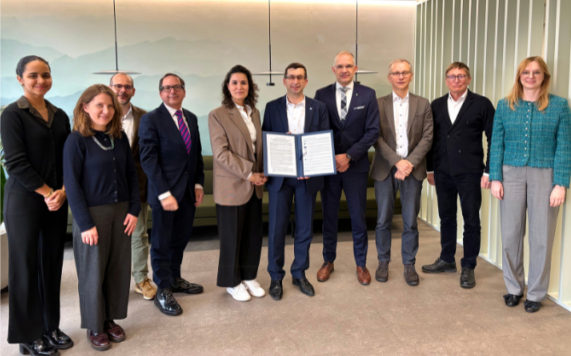
The signatories of the Joint Biomethane Declaration, leading European industry associations, are calling for biomethane to become a central building block of the EU’s reindustrialisation, energy security, and transition to climate neutrality. The Declaration sends a clear signal of strong industrial demand for biomethane, essential to keep EU industry competitive while enabling defossilisation and more circular production processes.
European industry, as the Eba reports, is under mounting pressure from high energy prices and rising carbon costs, with some sectors already facing production cuts and closures. With 22 bcm of combined biogas and biomethane produced in Europe today, sustainable biomethane offers immediate, scalable relief, integrating seamlessly into existing energy systems and gas infrastructure. Produced domestically, it strengthens energy independence and reduces Europe’s exposure to global gas market volatility, at a time when the EU still imports around 90% of its gas.
Biomethane as a solution
Biomethane is a cost-effective solution already being used for industrial defossilisation. It delivers immediate emissions reductions and secure supply, particularly in energy-intensive sectors such as chemicals, metals, pulp and paper, maritime, and fertilisers. Beyond energy use, biomethane is a cornerstone of Europe’s circular economy, providing critical feedstocks and co-products, including digestate and biogenic CO₂, for industrial and agricultural applications.
Around 25 Mt of digestate per year are already produced in Europe today from biogas production and upgrading processes. Nevertheless, synthetic fertiliser imports in the EU amounted to 24.2 Mt in 2024. Likewise, the sector is already capturing 1.17 Mt of bio-CO2, equivalent to around 14% of Europe’s merchant liquid and solid CO₂ demand. This is especially relevant considering that ammonia production in Europe. Which is the main source of CO₂ for current merchant markets, is expected to be disrupted due to the ongoing Middle East crisis, as fossil CO₂ plants depend on natural gas imports.
Priority actions
While the enabling framework is gradually taking shape, persistent gaps and delays are limiting market deployment. The declaration outlines 10 priority actions to accelerate biomethane rollout, including:
- Recognising biomethane’s role in achieving EU climate and energy targets, such as the 35 bcm production target by 2030 included in the REPowerEU.
- Removing administrative barriers to certification, trading, and corporate purchasing agreements.
- Supporting economies of scale through incentives, funding mechanisms, and long-term purchasing agreements, prioritising energy-intensive and hard-to-abate sectors.
- Harmonising national support schemes to facilitate cross-border deployment.
- Improving infrastructure access through integrated grid planning and streamlined permitting processes.
The signatories stress that unlocking biomethane at scale is both a shared responsibility and a major opportunity for Europe. With a robust enabling framework, biomethane can deliver immediate emissions reductions, strengthen energy independence. And accelerate the carbon-neutral transformation of European industry and society. “We stand ready to work with European and national policymakers, regulators, and stakeholders to turn this potential into reality,” the Declaration states.