






- Focus on strategies to reduce dependence on raw materials
- New recycling solutions for the automotive industry
- Digital technologies as innovation drivers for the industry
Circularity is becoming increasingly important in the face of geopolitical tensions, fragile supply chains, and rising raw material prices. The event program at IFAT Munich impressively demonstrates how recycling, digitalization and new collaboration can help use resources more efficiently and strengthen economic resilience. The world’s leading trade fair for environmental technologies will be held in Munich from May 4 to 7, 2026.
Rarely in its 60-year history has IFAT Munich been so closely linked to global economic and geopolitical developments as it is today. Against the backdrop of global supply chain crises, the trade fair’s key topics are increasingly becoming the focus of politics and industry. That’s because a consistently implemented circular system is seen more and more as a decisive factor to reduce dependency on raw materials and at the same time ensure the competitiveness of the German and European economy.
This approach is also gaining political momentum. In December 2025, the European Commission presented the RESourceEU action plan. In addition to funding programs for more efficient use of resources, it also plans export restrictions for certain waste streams, such as aluminum scrap or waste from permanent magnets, in order to strengthen recycling capacities within Europe. The introduction of new labeling requirements and additional recycling incentives for batteries is also planned.
IFAT event program: focus on securing raw materials
“Around six weeks before the start of the trade fair, it’s clear that our exhibitors are bringing valuable impetus and innovations for greater raw material security to Munich,” says Exhibition Director Philipp Eisenmann. Examples include new processes for recycling lithium-ion batteries, innovative approaches in car recycling, and digital technologies for more accurate sorting of recyclable materials.
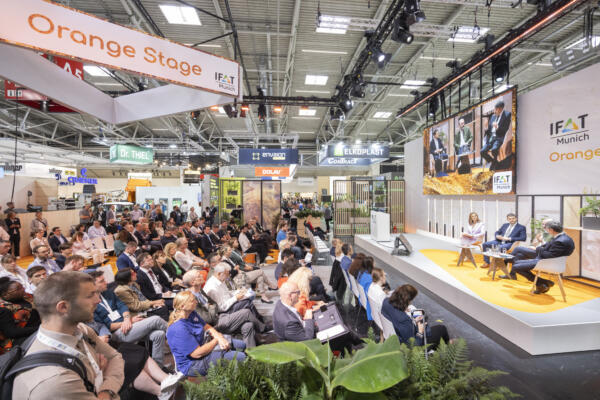
This topic also plays a key role in the event program. On the Orange Stage in Hall A5, several panel discussions will focus on the opportunities and strategies of a sustainable circular economy. Among the organizers of these discussions are the Federal Association of the German Waste, Water and Circular Economy Management Industry (BDE), Germany Trade & Invest (GTAI), the German Federal Environmental Foundation (DBU), and the German Federal Ministry for the Environment.
Automotive industry: closing material cycles even more comprehensively
One sector with particularly high resource requirements is the automotive sector. The European Union has therefore set the goal of recovering significantly more materials, recycling them to a high quality, and keeping them in circulation within the EU, where possible. At the same time, the aim is to reduce dependence on imports and strengthen resilience to supply chain disruptions. These objectives are also reflected in the new European End-of-Life Vehicles Regulation (ELV-R), which is currently in the final legislative procedure. It sets stricter recycling quotas, calls for higher use of recycled plastics, and introduces a digital vehicle passport to facilitate dismantling and recycling.
With the ramp-up of electromobility, lithium-ion battery recycling is also becoming more significant. Energy storage systems contain strategically important raw materials such as nickel, cobalt, lithium and graphite. High recovery rates are already technically possible, but the economic attractiveness of the processes depends heavily on the respective market prices. At the same time, new industrial recycling capacities are currently emerging in Europe.
Against this backdrop, several events on the Orange Stage will address the topic. Experts from the automotive and recycling industries will discuss topics such as urban mining, closed material cycles, and new partnerships along the value chain.
Other program items deal with extended manufacturer responsibility, such as the recycling of used tires, and industrial processes for recovering critical raw materials from lithium-ion batteries. The organizers include the BDE, the Resource Efficiency Center Bavaria (REZ), the Federal Association for Secondary Raw Materials and Disposal (bvse) and the Construction Machinery and Building Material Plants Association (VDMA).
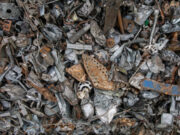
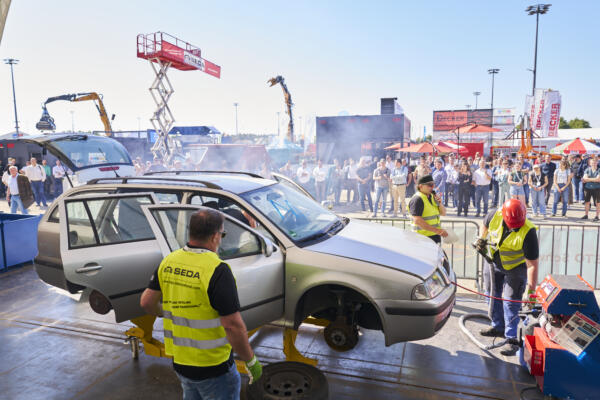
In addition to discussions and expert lectures, IFAT Munich also offers practical insights. In a live demonstration entitled “Steel and metal recycling under the banner of Green Steel (BDSV)”, the Federal Association of German Steel Recycling and Disposal Companies (BDSV) will be showcasing modern mechanical dismantling processes in the outdoor area.
AI, robotics and digitalization as innovation drivers
Artificial intelligence, robotics, and digital technologies are currently among the most important innovation drivers in circular and waste management. The industry expects of them better sorting results, more efficient operating processes, greater occupational safety, and lower emissions along the entire value chain.
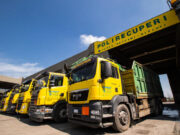
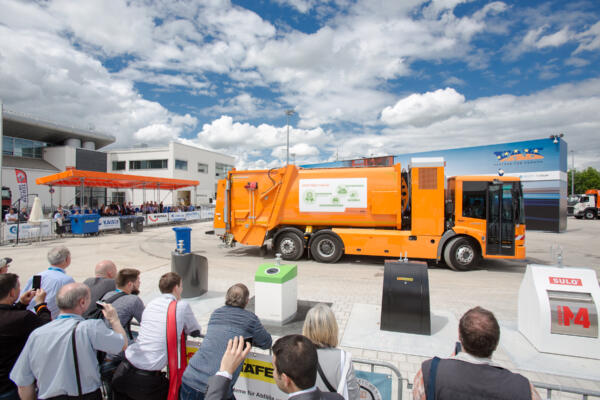
This also opens up new opportunities in municipal waste management: for example, AI can help minimize mis-sorted waste, or optimize the route planning for collection vehicles. Concrete applications, implementation challenges, and strategic potential for cities and municipal companies are the focus of a panel discussion organized by the German Association of Local Utilities (VKU) on the Orange Stage.
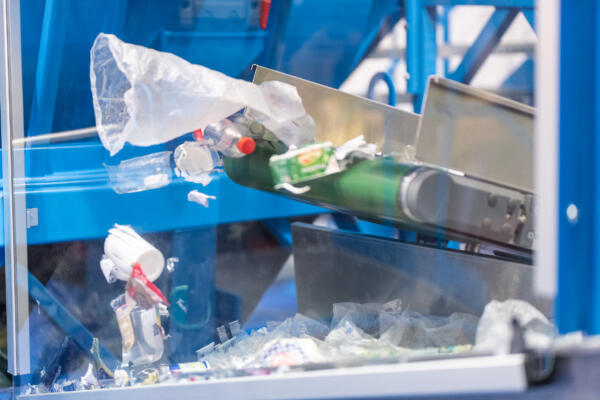
At IFAT Munich, the VDMA will also be presenting an initiative to standardize the data exchange of sensor-controlled sorting systems in order to enable smarter and more efficient recycling processes. At another event, the VDMA will discuss the role that digital product passports can play in the future for higher-quality recycling.
Opportunities and limits of new technologies
On the last day of the trade fair (May 7), the International Solid Waste Association (ISWA) will take a critical look at the use of AI and robotics in waste management. In addition to innovative technologies – such as collaborative robots for dismantling complex electronics, AI-supported material recovery, or digital material flow tracking – challenges and possible side effects will also be discussed. After all, AI systems rely on high-quality, standardized data, and a stable digital infrastructure.
However, waste streams are often heterogeneous and heavily contaminated. Models that work well under laboratory conditions therefore often reach their limits in practice. At the same time, many systems entail high investment costs – an obstacle for smaller recycling plants in particular, as well as for companies in low- and middle-income countries. However, this is precisely where the greatest increase in the amounts of waste is expected in the coming decades. ISWA therefore believes that a key challenge is to combine digital innovations with practicable and sustainable system solutions.